
Geothermal Heating and Cooling in Vermont: A Homeowner’s Guide

If you live in Vermont, you’ve probably spent a fair amount of time thinking about how you heat your home.
Oil, propane, wood, mini-splits and heat pumps
are all part of the conversation here, and then there’s geothermal. Geothermal is one of those systems that a lot of people have heard about but don’t necessarily understand. I get it. Once the conversation turns to boreholes, ground loops, heat pumps and coefficients of performance, most homeowners understandably tune out.
But the basic idea behind geothermal is actually beautifully simple: instead of creating heat by burning fuel, we move heat that already exists.
And in Vermont, where the temperature outside can swing from well below zero in the winter to hot and humid in the summer, that distinction can be incredibly valuable. At Velvaere, we’ve had the opportunity to design and build homes using two different geothermal approaches: a closed loop submerged in a pond and a closed vertical ground loop installed in deep boreholes. The installations look very different, but both work on essentially the same principle.
Here’s what I think Vermont homeowners should understand before deciding whether geothermal makes sense for their home.
First, What Is Geothermal?
The term “geothermal” can make the system sound more exotic than it really is. What we’re talking about in a home is a ground-source heat pump. Like an air-source heat pump, it doesn’t generate heat through combustion. Instead, it uses electricity to move heat from one place to another.
During a Vermont winter, the system collects heat from the ground—or another suitable heat source, like a pond—and moves it into the house. During the summer, that process reverses. Heat is removed from the house and transferred back into the ground. The same system can therefore provide both heating and cooling.
The U.S. Department of Energy explains that while outdoor temperatures fluctuate dramatically throughout the seasons, temperatures below the earth’s surface remain much more consistent. That stable environment is geothermal’s big advantage. An air-source heat pump has to find heat in extremely cold outdoor air on a January night. A ground-source system exchanges heat with an environment that is considerably more stable.
How Efficient Is Geothermal?
This is the statistic that usually gets people’s attention. According to the U.S. Department of Energy, geothermal heat pumps can reach 300% to 600% efficiency on the coldest winter nights.
How can something possibly be more than 100% efficient? Because the electricity isn’t being converted directly into heat. It is powering equipment that moves heat that already exists. A simple way to think about it is that one unit of electrical energy can allow the system to deliver several units of heating energy into the home.
DOE also reports that geothermal systems can reduce energy consumption by approximately 25% to 50% compared with air-source heat-pump systems, depending on the system and conditions. Efficiency Vermont similarly describes properly designed and installed ground-source systems as having the highest efficiency of heat-pump systems.
That’s one of the reasons we’re so interested in geothermal for high-performance Vermont homes. But there is an important caveat: the system needs to be designed correctly, and the house matters just as much as the equipment. More on that in a minute.
There Isn’t Just One Kind of Geothermal
When homeowners picture geothermal, they often imagine a drilling rig boring deep holes into the earth. That is certainly one way to do it, but it isn’t the only way. The heat-exchange loop can be configured differently depending on the property, geology, available land and heating and cooling needs of the home.
At Velvaere, we’ve worked with two approaches that are particularly interesting for Vermont properties: pond loops and vertical ground loops.
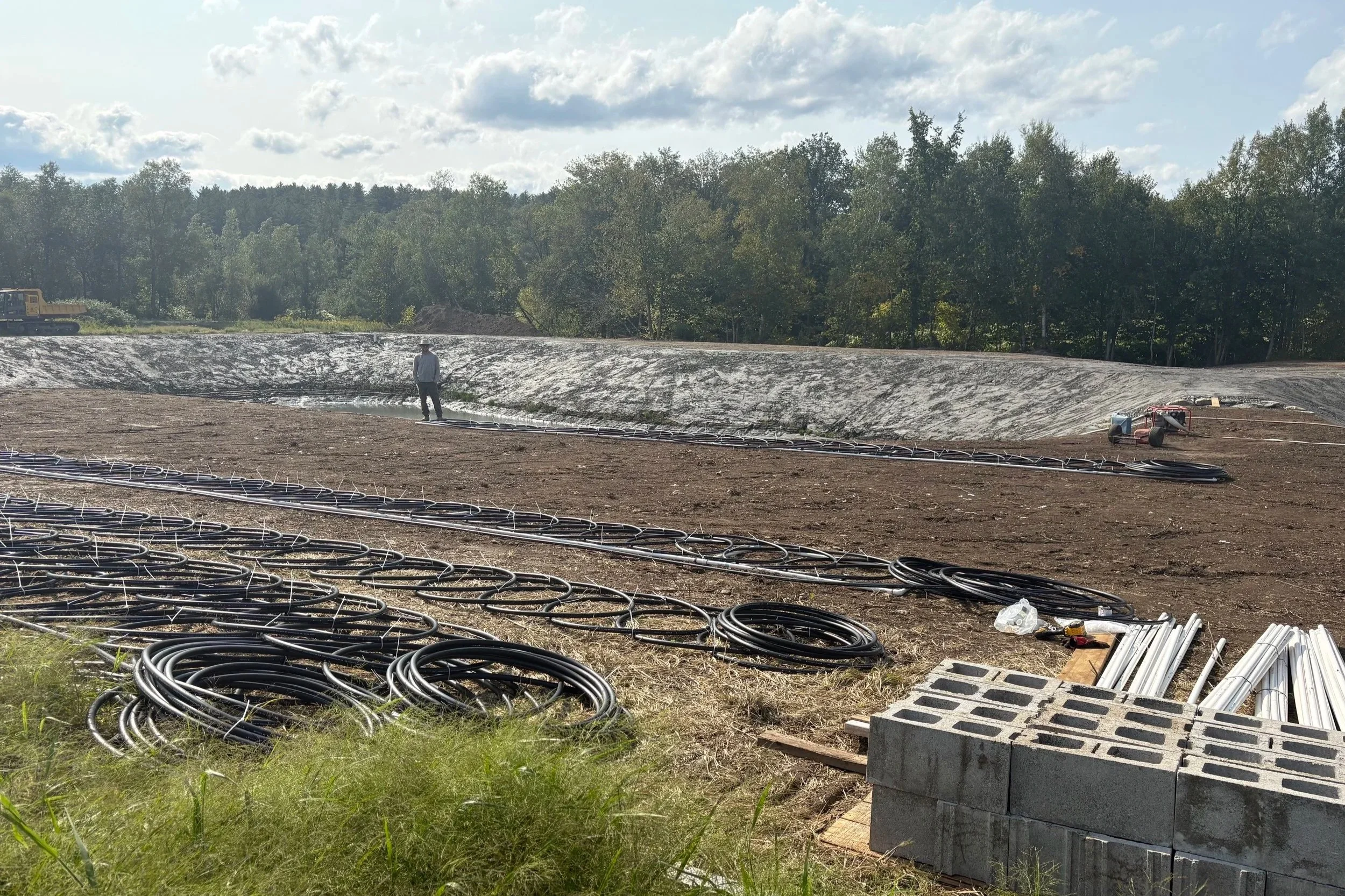
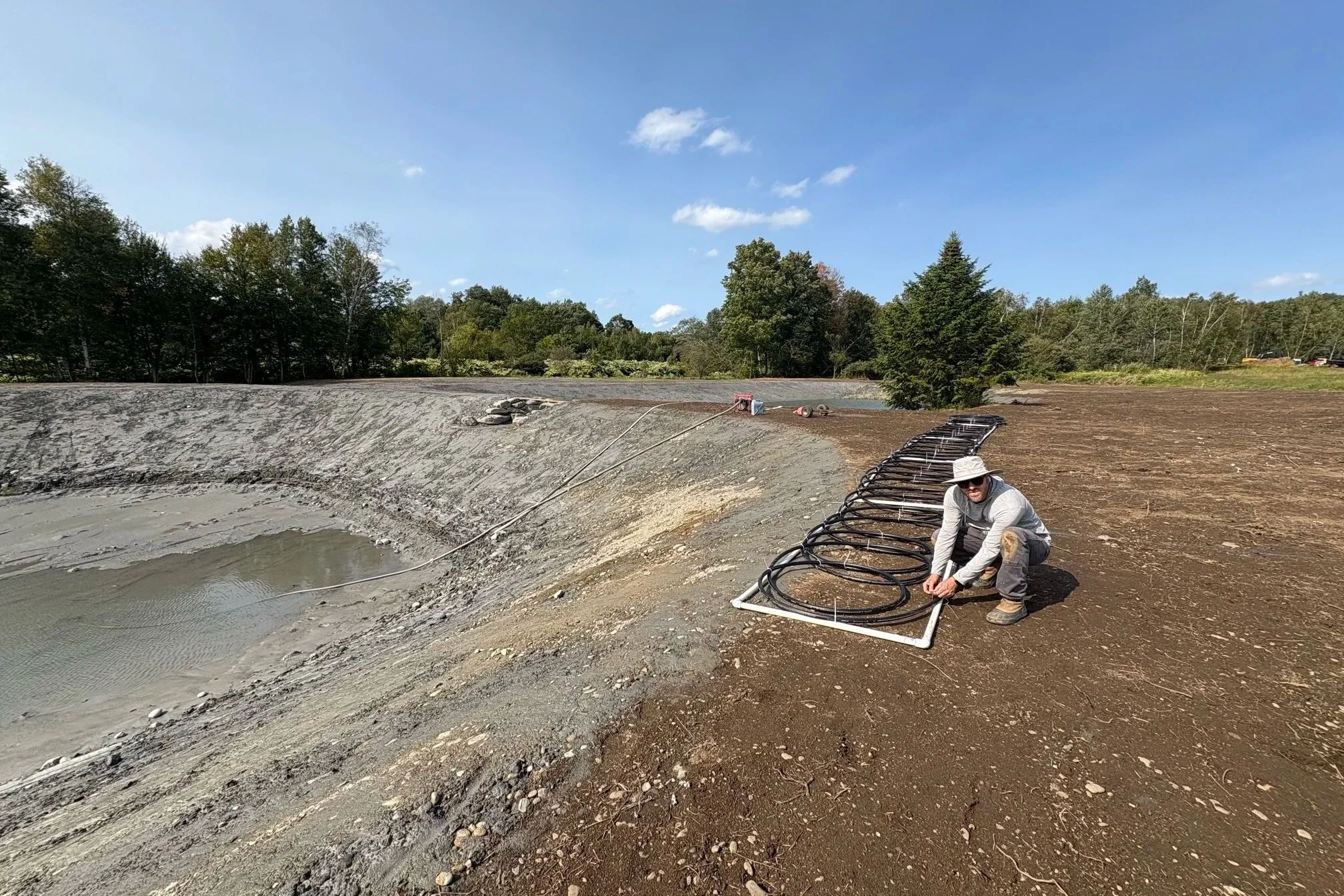
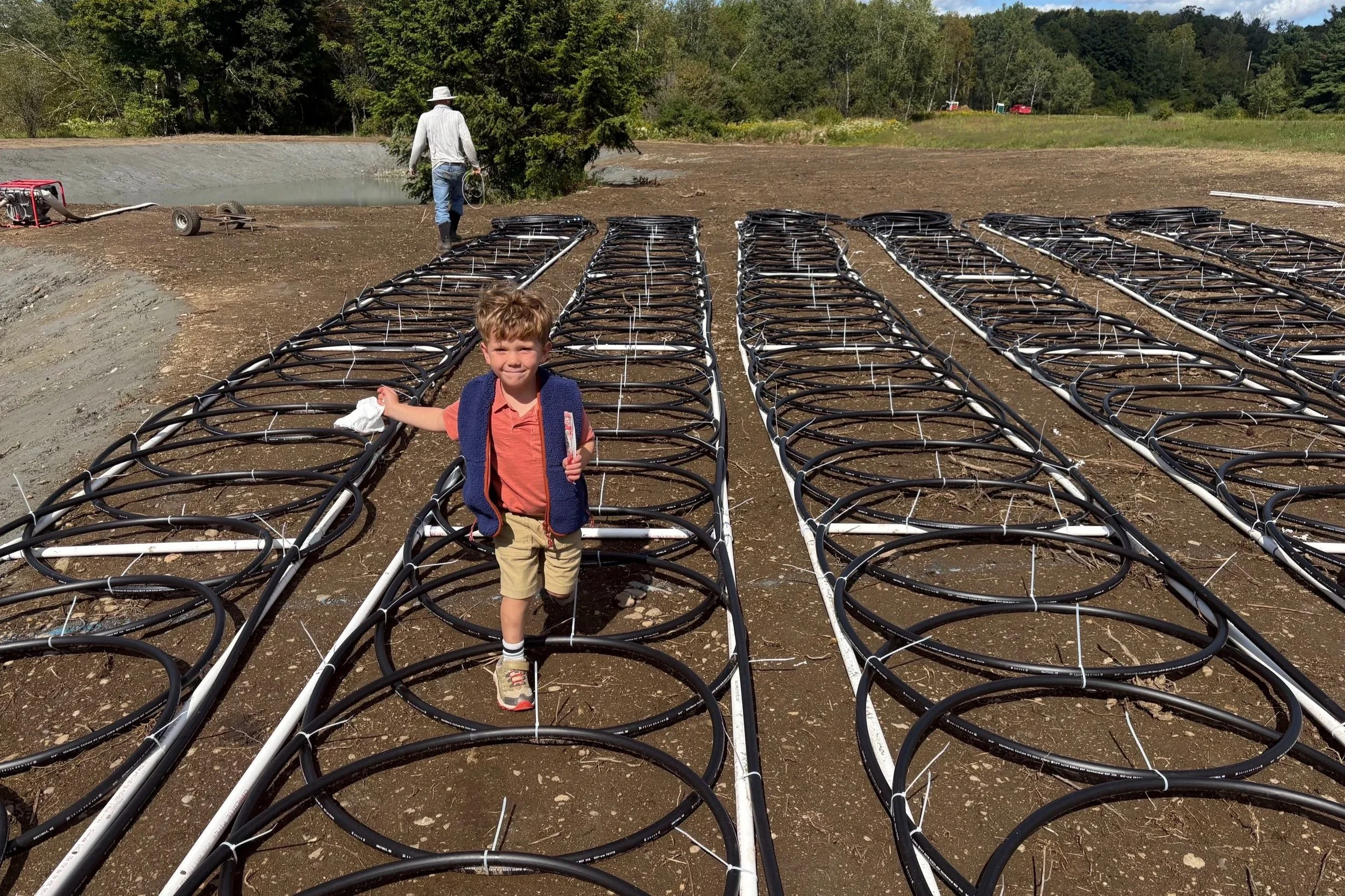
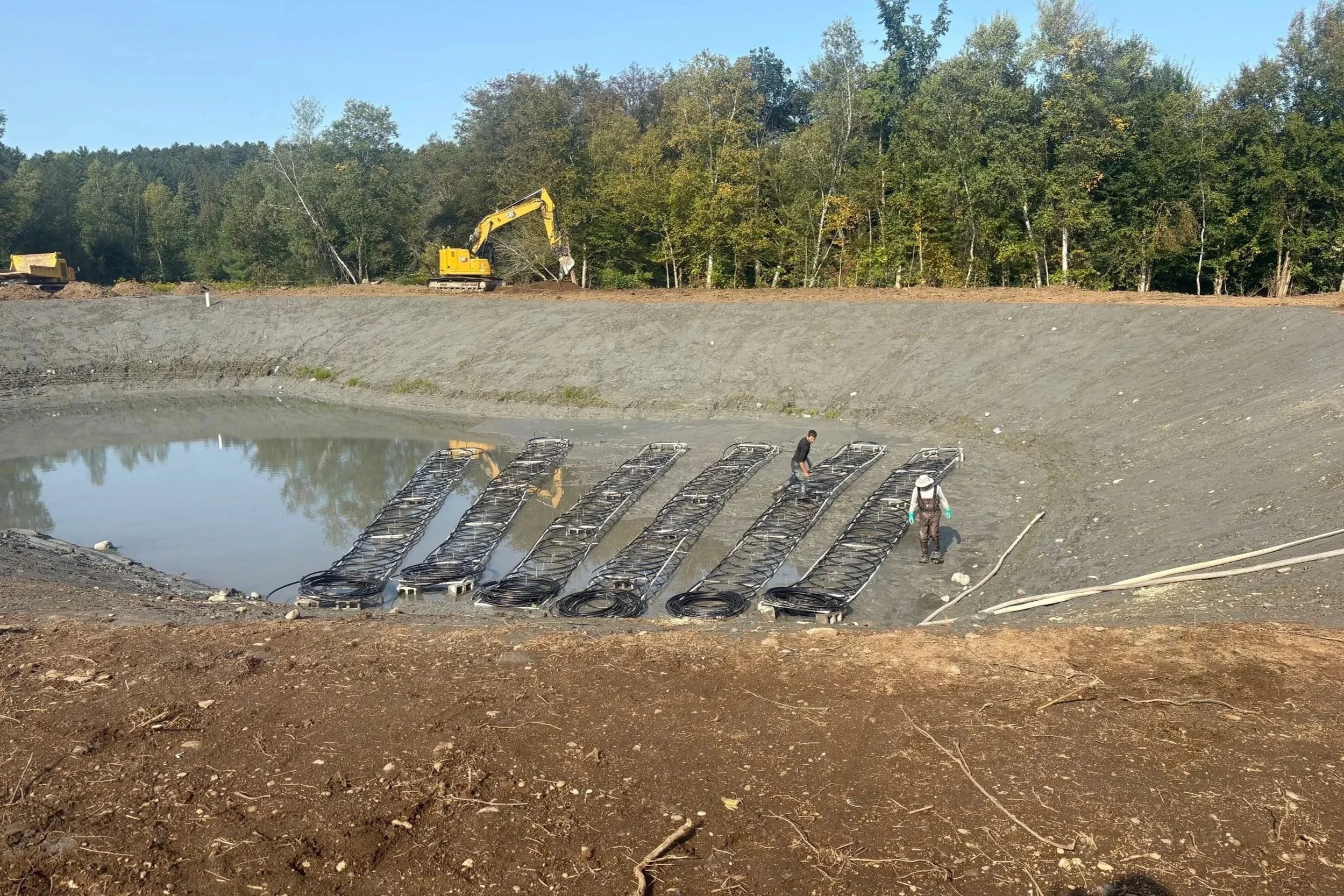
Pond-Loop Geothermal
If your property has an appropriate pond, that pond may potentially become part of your home’s heating and cooling infrastructure. I love this solution because it’s such a great example of designing with a site rather than simply placing a house on it.
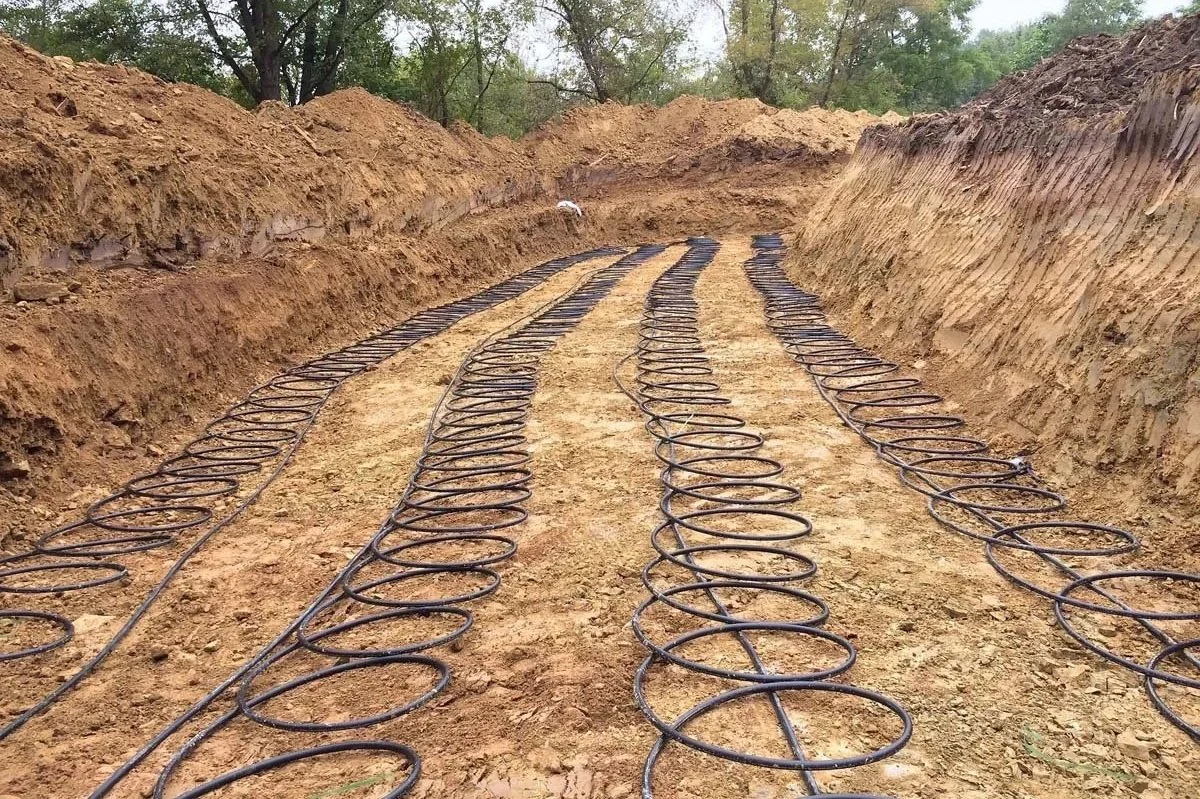
In a closed-loop pond system, coils of pipe are submerged in the pond. A fluid, typically water mixed with antifreeze, circulates through those pipes and exchanges heat with the surrounding environment. The pond water itself isn’t being pumped through your house. The pond is simply providing the environment where the closed geothermal loop exchanges heat.
In winter, the system extracts usable heat; in summer, it reverses and rejects heat from the house. For the right property, a pond loop can avoid the extensive drilling associated with a vertical ground-loop system, which can make it a really compelling solution.
Having a pond, however, does not automatically mean you have a geothermal pond. The pond needs to be evaluated for things like size, depth, water conditions, accessibility and the heating and cooling load of the home. That’s an engineering decision, not something I’d recommend determining from a photograph of your backyard.
Vertical Ground-Loop Geothermal
If you don’t have a suitable pond, or if another type of horizontal installation isn’t practical, the answer may be to go down. A drilling contractor creates deep vertical boreholes in the earth and installs closed-loop piping inside them. Fluid circulates through those pipes, allowing the system to exchange heat with the surrounding ground.
Once installation is complete, relatively little of the system is visible at the surface. That’s one of the advantages of vertical loops: they provide substantial contact with the earth while using a relatively small surface footprint. This can make them particularly useful on sites where there isn’t enough open land for extensive horizontal trenches.
You’ll sometimes hear these casually called “geothermal wells.” I prefer vertical ground loop or geothermal borehole, because a closed-loop geothermal system isn’t the same thing as the domestic well supplying drinking water to your house.
Pond Loop or Vertical Ground Loop: Which Is Better?
Neither, universally. The better question is: which system makes the most sense for this particular property and this particular house?
A suitable existing pond can make a pond loop incredibly compelling because you’re using a resource that’s already part of the landscape. A vertical loop can make much more sense where surface area is limited or there isn’t an appropriate body of water. Geology matters. Site access matters. The size and heating load of the house matter. Budget matters. Even the way we intend to distribute heat through the home matters.
This is why I don’t believe geothermal should be selected from a product catalog before the house and site have been considered together. One of the advantages we have when designing a home from the beginning is the ability to look at all of these things as one interconnected system.
Does Geothermal Really Work in a Vermont Winter?
Yes, and Vermont’s climate is actually part of what makes ground-source systems so interesting. Efficiency Vermont notes that the earth and underground water maintain much more stable temperatures throughout the year than outdoor air, and that stability contributes to the high operating efficiency of ground-source heat pumps.
Efficiency Vermont also notes that ground-source systems can be designed to meet 100% of a building’s heating and cooling needs without a backup heating system. That doesn’t mean every geothermal installation automatically will. It means a properly designed system can, and proper sizing matters tremendously.
So does the building envelope.
The Part of the Geothermal Conversation I Think Gets Missed
This is where my architect hat really comes on. I don’t want to put an incredibly efficient geothermal system into an inefficient house and call the job done.
Before deciding how we’re going to heat a Velvaere home, we’re trying to reduce how much heating and cooling that home needs in the first place. That means thinking carefully about airtightness, continuous insulation, high-performance windows, thermal bridging, solar orientation, ventilation and the overall size and efficiency of the home. The mechanical system comes after that.
Think about a cold January night. If we can design a house that loses substantially less heat through its walls, roof, windows and air leakage, the heating system simply has less work to do. That can affect equipment sizing, operating costs and, most importantly, how comfortable the house feels.
This is why geothermal isn’t really a standalone sustainability feature to us. It’s one piece of a high-performance home.
What Does Geothermal Actually Feel Like to Live With?
This may be the more important question because most homeowners don’t actually care about boreholes. They care about what happens inside their house.
A well-designed geothermal system can provide heating and cooling from one all-electric system. There is no on-site combustion from an oil or propane furnace, no fuel tank to fill and no worry about running out of heating fuel. Efficiency Vermont also points out that heat pumps eliminate direct combustion emissions such as carbon monoxide and nitrogen oxides from the heating equipment.
Ground-source systems can be remarkably quiet as well. Because you don’t need the conventional outdoor condenser associated with an air-source system, a lot of the mechanical infrastructure quietly disappears into the background.
That’s the part of high-performance design that interests me most. Eventually, the technology should almost disappear. The house is warm in January. It’s cool in July. The systems are quiet, and you don’t have to spend much time thinking about how any of it is happening.
To me, that’s good design.
What Does Geothermal Actually Feel Like to Live With?
This may be the more important question because most homeowners don’t actually care about boreholes. They care about what happens inside their house.
A well-designed geothermal system can provide heating and cooling from one all-electric system. There is no on-site combustion from an oil or propane furnace, no fuel tank to fill and no worry about running out of heating fuel. Efficiency Vermont also points out that heat pumps eliminate direct combustion emissions such as carbon monoxide and nitrogen oxides from the heating equipment.
Ground-source systems can be remarkably quiet as well. Because you don’t need the conventional outdoor condenser associated with an air-source system, a lot of the mechanical infrastructure quietly disappears into the background.
That’s the part of high-performance design that interests me most. Eventually, the technology should almost disappear. The house is warm in January. It’s cool in July. The systems are quiet, and you don’t have to spend much time thinking about how any of it is happening.
To me, that’s good design.
What About Cooling?
Geothermal can provide cooling as well as heating. The heat pump simply reverses direction, removing heat from the house and transferring it back into the ground.
The distribution system still matters. A home relying on radiant floors for winter heating may need another strategy for summer cooling and humidity control. Efficiency Vermont notes that homes using certain hydronic distribution systems may require ductwork or another cooling solution.
This is another reason we think about heating, cooling, ventilation and humidity management during design rather than treating them as equipment decisions that happen after construction.
Is Geothermal Expensive?
This is geothermal’s biggest disadvantage: the upfront cost can be significant.
Efficiency Vermont specifically notes that ground-source systems carry a substantially higher initial price than air-source heat pumps because of the excavation or drilling required to install the ground loop. You aren’t only purchasing a piece of HVAC equipment; you’re installing infrastructure in the earth that is intended to serve the house for a very long time.
That means geothermal should be evaluated as a long-term investment rather than simply comparing the purchase price of one indoor HVAC unit with another. For some homes, the economics will make sense. For others, an excellent cold-climate air-source heat pump paired with a very high-performance envelope may be the smarter place to invest the money.
We don’t believe in specifying geothermal simply because it sounds sustainable. It needs to earn its place in the project.
What Geothermal Incentives Are Available in Vermont in 2026?
This is an area where homeowners should always check the current programs before making a financial decision because incentives change.
As of August 2026, Efficiency Vermont lists ground-source heat-pump incentives of up to $2,100 per ton for qualifying systems. Eligibility requirements currently include factors such as qualifying equipment, installation in Vermont and installation by an eligible Efficiency Excellence Network contractor or driller. Some income-qualified Vermont homeowners may also be eligible for an additional bonus.
One major federal change is worth knowing because there is still a lot of outdated information online. The federal Residential Clean Energy Credit is no longer available for new geothermal expenditures made after December 31, 2025. Older geothermal articles may still reference a 30% federal tax credit, but according to the IRS, that information no longer applies to new 2026 expenditures.
Before purchasing equipment or making financial assumptions about a project, I would always verify the current incentive requirements directly with Efficiency Vermont and the current federal tax rules with the IRS.
What Should You Ask Before Choosing Geothermal?
If I were a Vermont homeowner considering geothermal, I wouldn’t begin by asking an installer, “How many tons do I need?” I’d begin with the house.
How much heating and cooling does the house actually require? Has someone completed a proper load calculation rather than estimating equipment size from square footage? How good is the building envelope? If it’s an existing home, would some of the budget be better spent first on air sealing, insulation or windows?
Then I’d start asking questions about the site. Does a pond make sense? Would vertical boreholes be more appropriate? What does the geology look like? How easily can drilling or excavation equipment reach the site?
Finally, I’d look at the entire mechanical strategy. Will the house use ductwork, radiant floors or another hydronic system? How will it be cooled and dehumidified in summer? Will geothermal contribute to domestic hot-water production? What is the projected annual electrical consumption? Which incentives does the exact equipment qualify for?
Most importantly, I’d want to know who is looking at the whole picture. The ground loop, heat pump, distribution system, ventilation system, building envelope and house itself shouldn’t be treated as unrelated pieces.
So, Would I Choose Geothermal for a Vermont Home?
When the site, house and budget support it, absolutely.
I love the simplicity of the idea. We’re surrounded by dramatic seasonal change in Vermont: snow, sub-zero nights, mud season and hot, humid summer afternoons. Just below all of that change is a remarkably stable thermal resource, and geothermal gives us a way to use it.
But I don’t think the lesson is that every Vermont homeowner should install geothermal. The bigger lesson is that our homes can work with their environment instead of constantly fighting against it.
Sometimes that means geothermal. Sometimes it means investing more in the building envelope. Sometimes it means high-performance windows, thoughtful solar orientation or an excellent cold-climate air-source heat pump. Usually, it’s a combination of many decisions working quietly together.
That’s what wellness architecture means to us. It isn’t about adding technology for the sake of technology, chasing a certification or checking a sustainability box. It’s about designing a home that asks less of its mechanical systems, less of its environment and ultimately less of the people who live there.
We want a home that’s comfortable when it’s -15°F outside and cool when Vermont suddenly decides it’s 90°F and humid. A home that’s quiet, uses less energy and has complicated systems that eventually become something you barely think about at all.
Because ultimately, the goal isn’t to live with geothermal.
It’s to live really well.
Vermont Geothermal Resources
For vermont homeowners interested in exploring geothermal further
I would start with Efficiency Vermont’s Ground Source Heat Pump program for current incentives, qualifying equipment and contractor requirements.
For a deeper technical explanation of geothermal technology, efficiency and different ground-loop configurations, the U.S. Department of Energy’s geothermal heat-pump resources are an excellent reference.
And because incentives, tax rules and qualifying equipment change over time, always verify current requirements directly with Efficiency Vermont and the appropriate federal agencies before making a purchase or financial decision.
Have any thoughts or questions? We’d love to hear from you. Drop a comment below or contact us here.