
The Swing Set Reclaim:
What to Do When Your Kids Outgrow the Playset
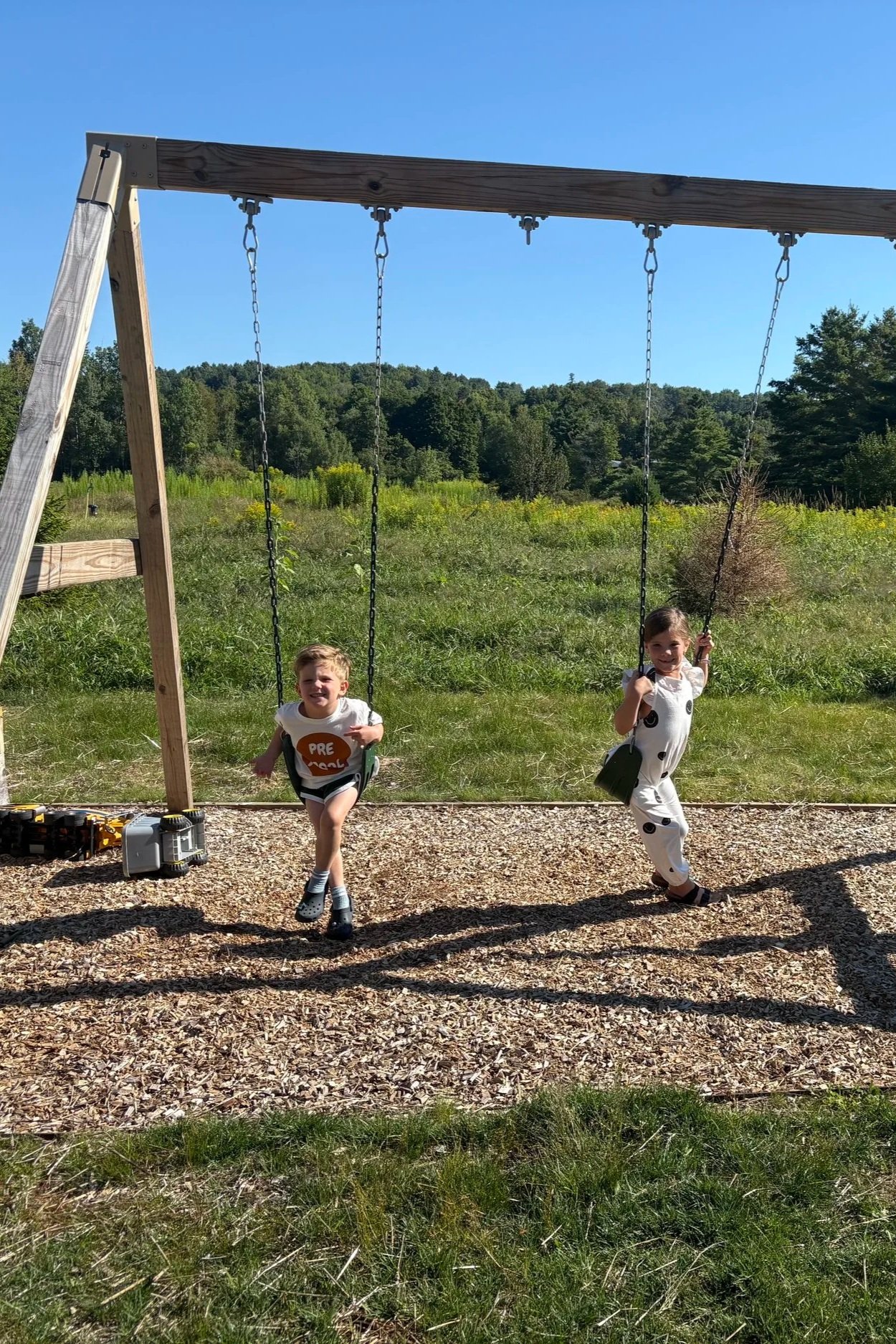
At some point, every parent looks at the backyard and realizes the kids have outgrown the swing set.
It happened to us at Hytta.
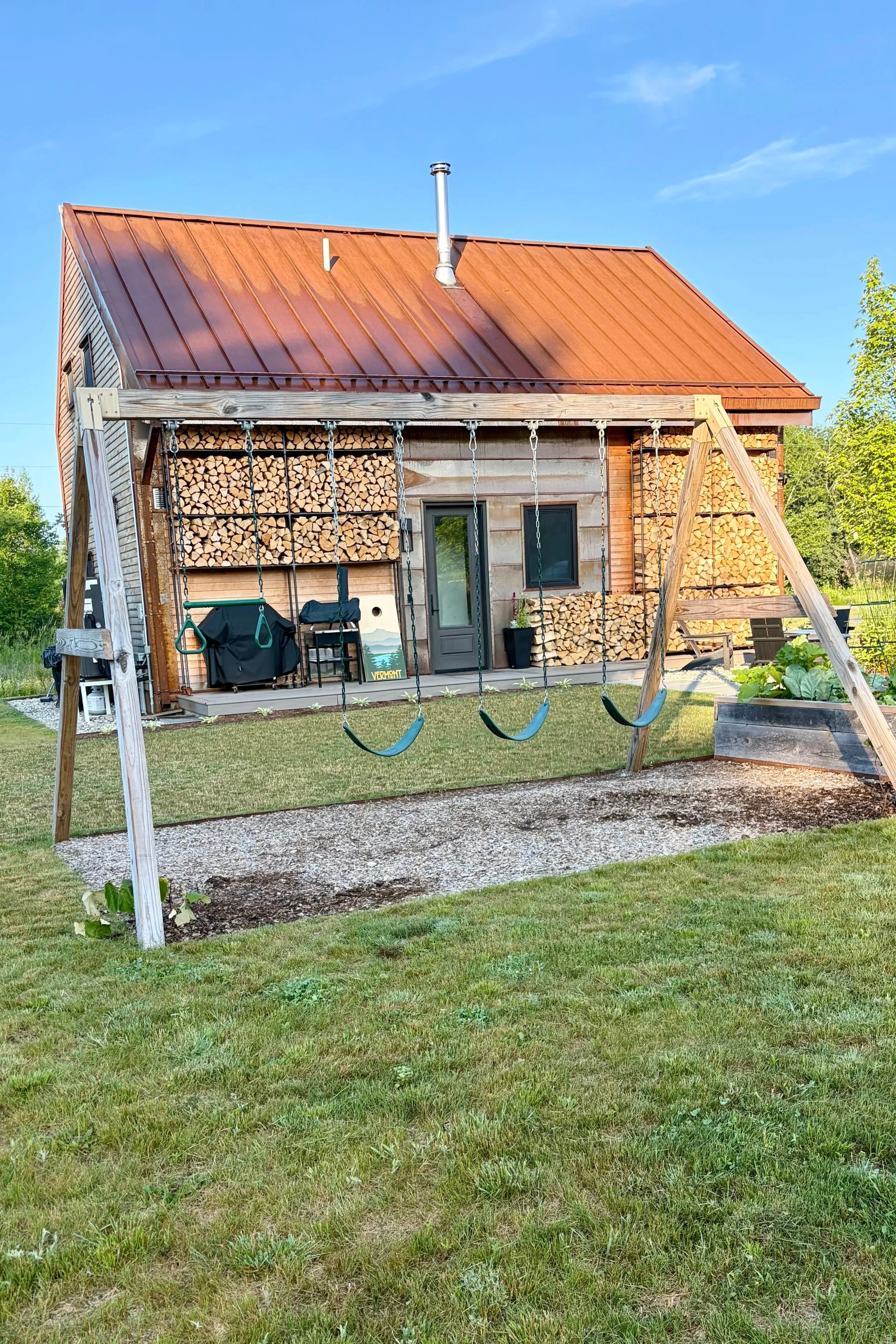
The swings weren’t getting much use anymore, but the structure itself was still there—solid, useful, and honestly, kind of beautiful in its own way. We could have taken it apart and hauled it away.
Instead, I started looking at it differently.
What if we didn’t get rid of it? What if we reclaimed it?
So that’s exactly what we did.
We turned our old Gorilla playset into an outdoor dining and garden space, and it has quickly become one of our favorite places at Hytta.
First, think about where you want it to live
As a landscape designer…
one of the first things I would consider is where the swingset will make the most sense in the landscape once it has a new purpose.
You’ll notice ours isn’t sitting in grass, and that’s intentional.
If you’re aiming for a more formal outdoor dining space, you could actually move your existing playset onto a patio or other hardscape area. Instead of spending thousands of dollars on a new pergola or outdoor structure, you may already have the bones of one sitting in your yard. The roof and framing are already there—you’re essentially reclaiming an existing structure and giving it a new use.
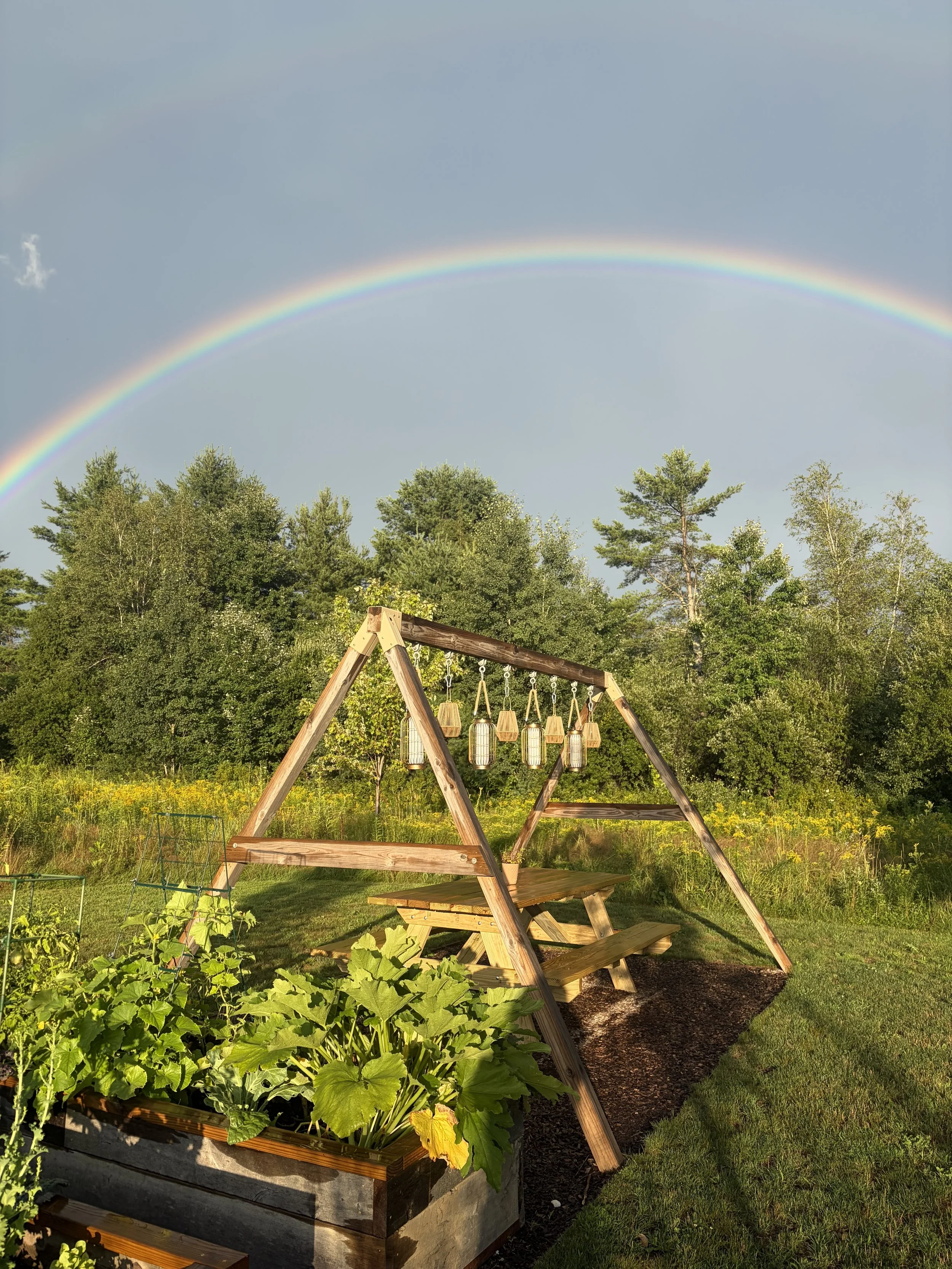
For us, the swing set already occupied a useful location near our vegetable garden, so we worked with what we had. Rather than surrounding it with lawn, we created a low-maintenance surface underneath it that would make the space easier to live with long term.
The landscape detail: no mowing underneath
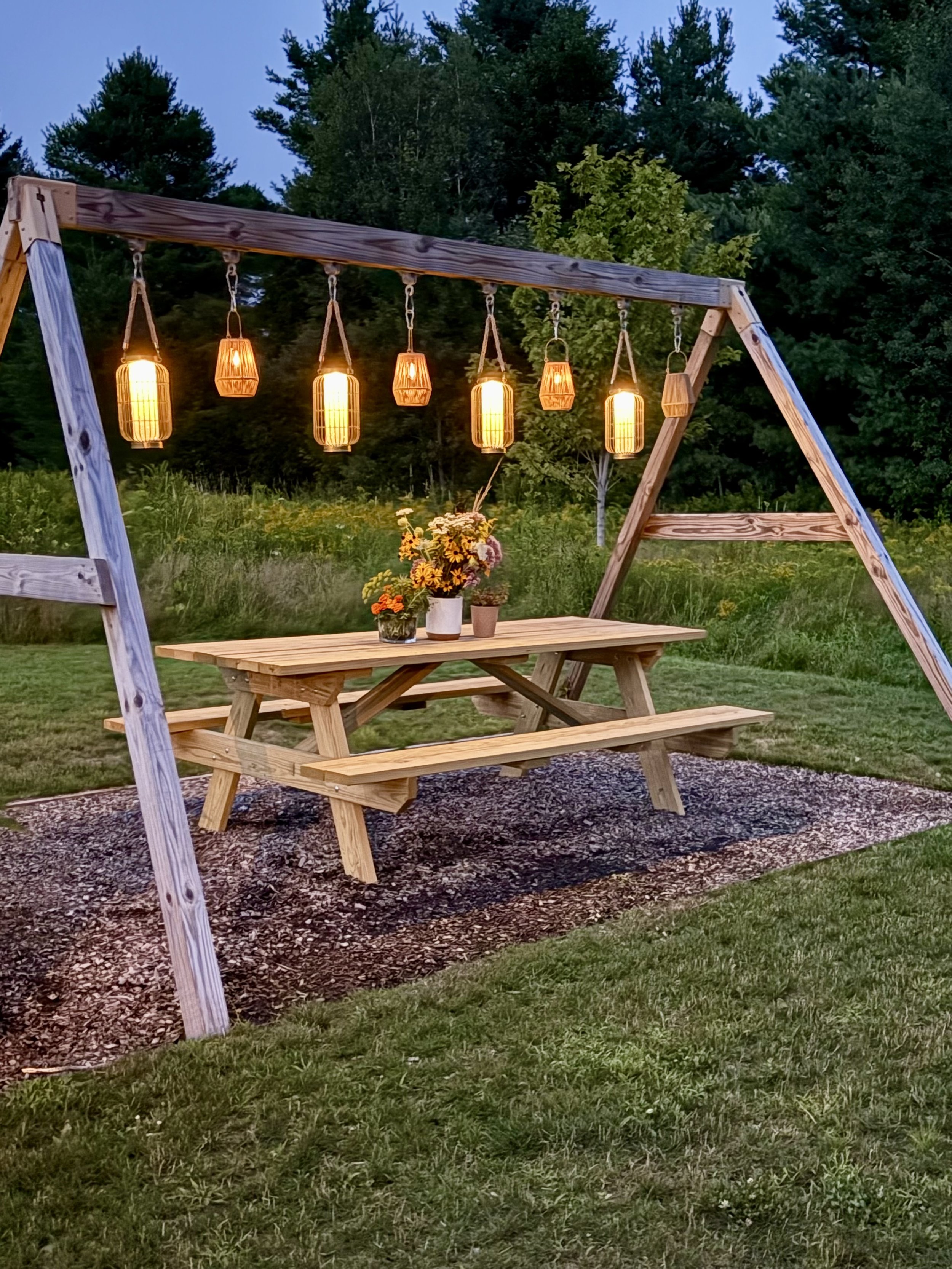
The area beneath our swingset is an edged playground wood-chip surface, and it’s one of my favorite practical details in the entire project.
We built it in layers: 3 inches of compacted rock, filter fabric, and then 3 inches of playground wood chips on top. The rock gives the base stability, the fabric keeps everything separated, and the wood chips create a soft, natural finish that feels intentional rather than improvised.
From a landscape perspective, what I love most about this is how much maintenance it removes.
There’s no more trying to mow underneath a structure,
no awkward trimming around posts, and no grass creeping up into places it shouldn’t be. It just stays clean and defined without effort.
It’s simple, inexpensive, and incredibly low maintenance. And because wood chips are already a familiar material in play areas, it worked perfectly for its original life as a swingset—and now works just as well as the foundation for an outdoor dining space.
From playset to gathering place
The transformation itself was much simpler than most people expect.
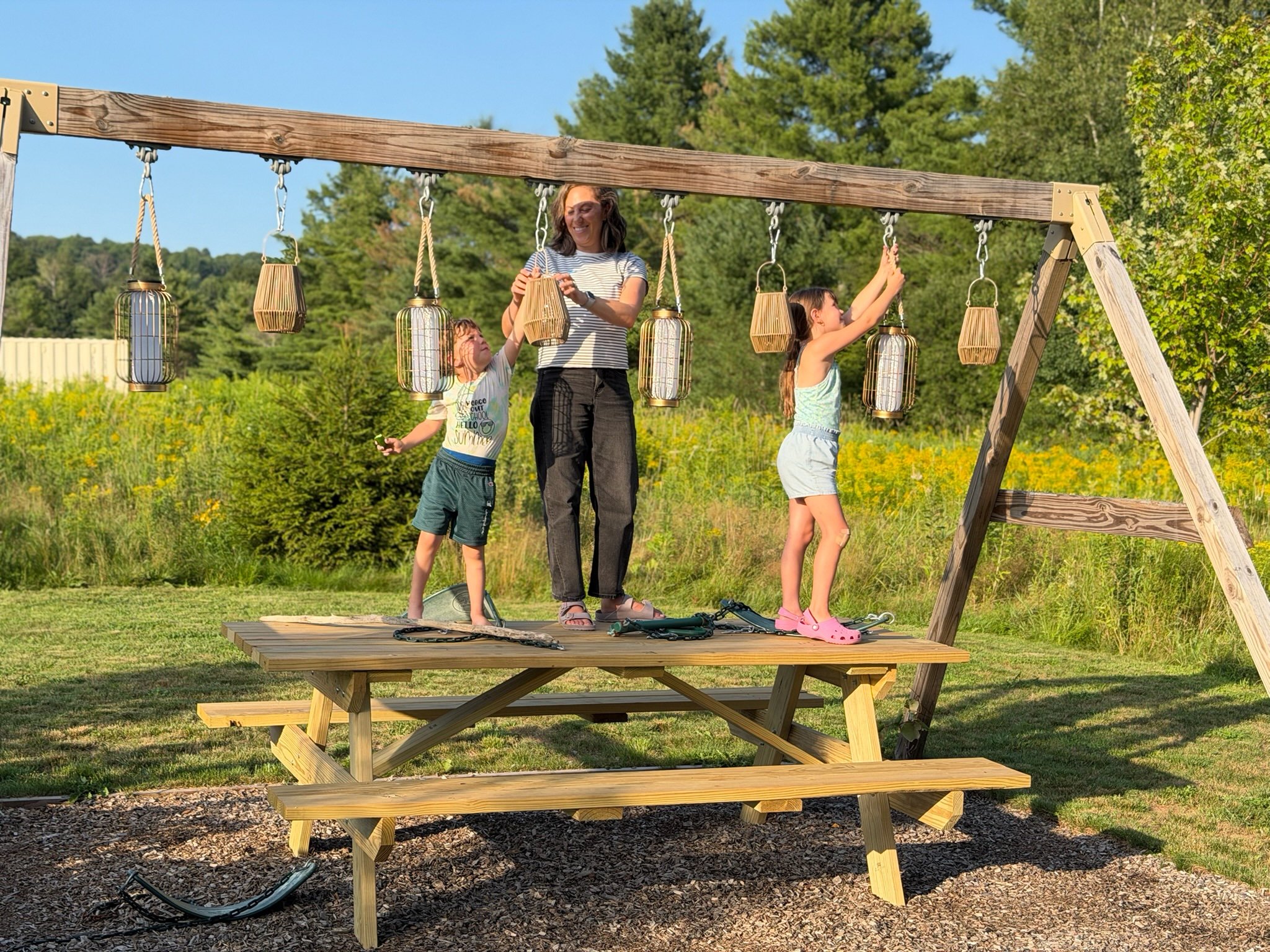
We started by removing the swings and chains, but we intentionally left the existing swing hangers and hardware in place. That decision mattered more than it might seem. We didn’t want to dismantle the structure or overthink it—we wanted to work with what was already there and let the new purpose emerge naturally.
Then came the lighting.
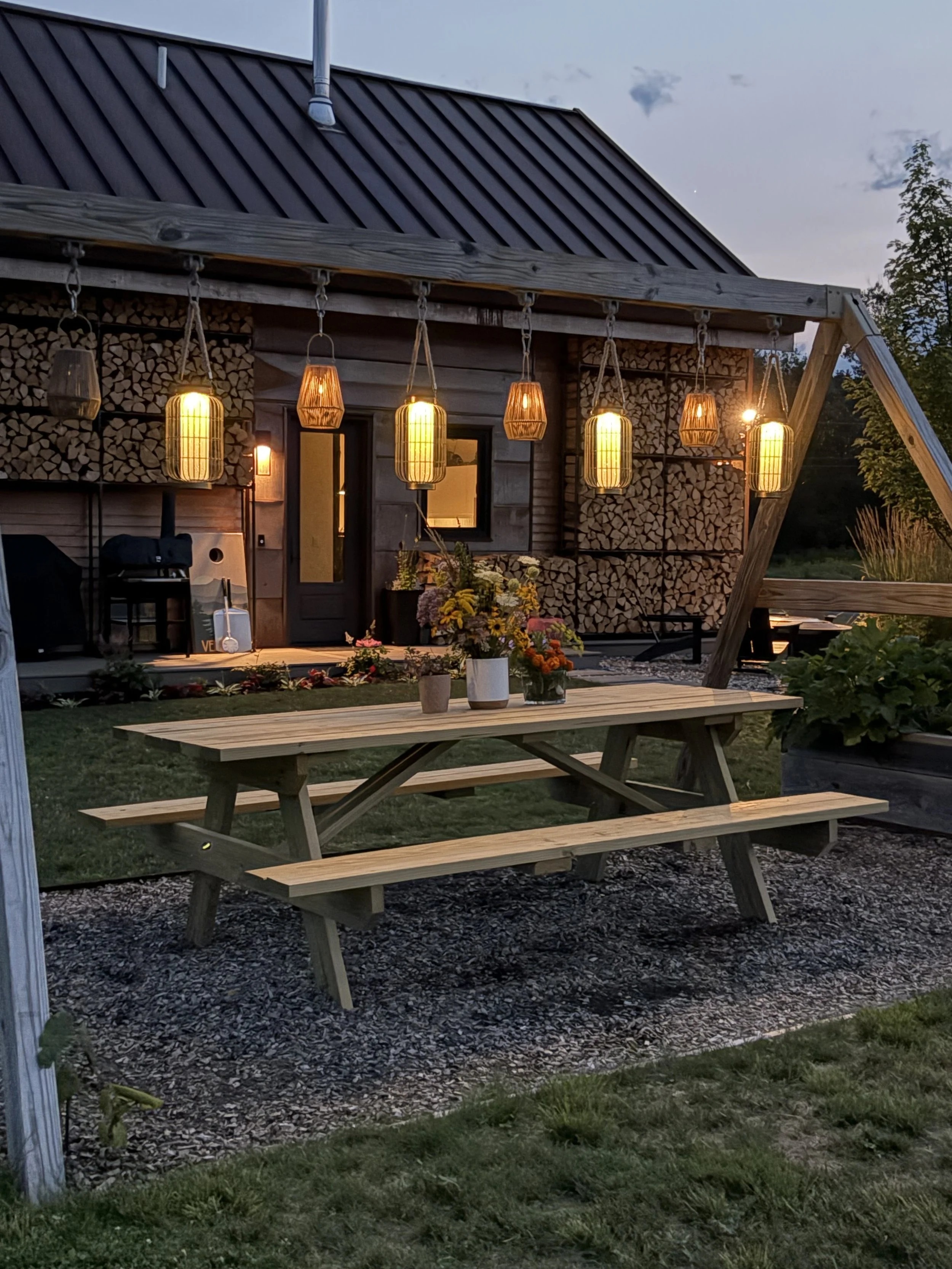
We ordered a mix of solar lights in different sizes and simply hung them from the existing swing hangers and clips.
Instead of making everything uniform or overly precise, we leaned into variation—different scales, different spacing, different rhythms. It gave the whole structure a softer, more relaxed feel.
Here’s what we used:
At night, it feels a little whimsical, which is exactly what we wanted. It still carries the memory of what it used to be, but it now feels like something entirely new.
The picnic table
At the center of it all is a simple pressure-treated picnic table.
We ordered ours from a local retiree who builds and delivers them, and the total cost was $370. We intentionally kept this part straightforward. There was no need for a custom outdoor dining table or something overly designed. We wanted something durable, functional, and easy to live with.
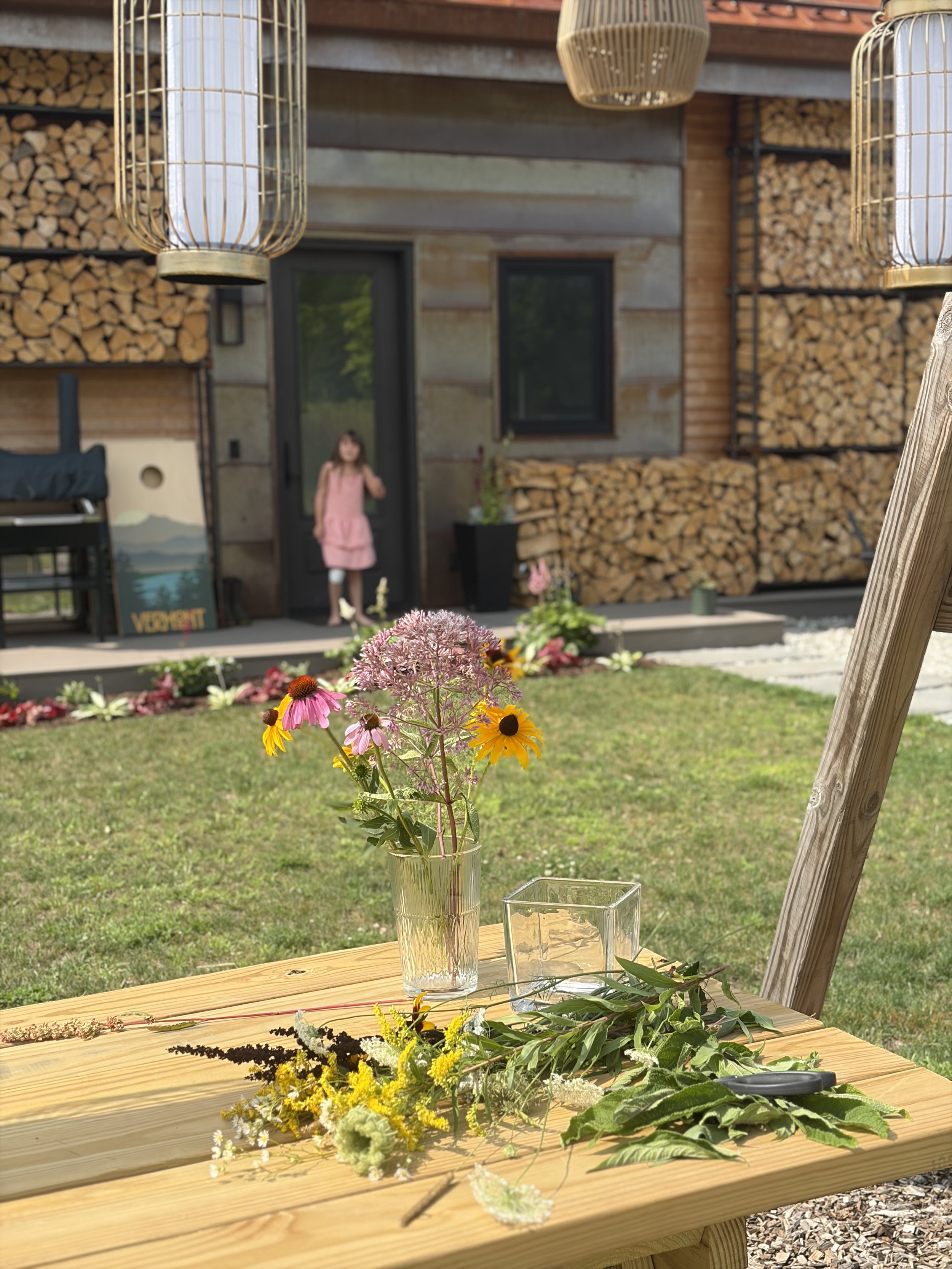
What surprised us most is how often we use it beyond dining. Because it sits right next to the vegetable garden, it has naturally become our garden work table as well.
When we harvest greens, herbs, or flowers, we bring everything over, clean and sort it right there, and then carry it straight into the kitchen.
It’s one of those small shifts that quietly makes everyday life easier.
We added something that will take time
One of the most important parts of this project is that it isn’t finished.
We planted grape vines near the back posts…
and right now they’re still small and unassuming. But over time, they’ll climb the structure, soften it, and eventually add shade and greenery that will completely change how the space feels.
That’s something I really love about it. It’s not static. It’s evolving.
The vines will grow, the surrounding plants will mature, and even the lighting will feel different as the seasons shift. The space is designed to become more beautiful over time, not just on day one.
What did it cost?
This wasn’t a major construction project.
Our biggest expenses were the picnic table and delivery at $370, solar lights at about $300, and grape vines at roughly $50. In total, we were around $720.
And the most significant piece—the swingset itself—we already had.
That’s really the point. We didn’t buy a new structure or tear something out to replace it. We simply reimagined what was already there and gave it a second life.
The best part wasn’t the transformation
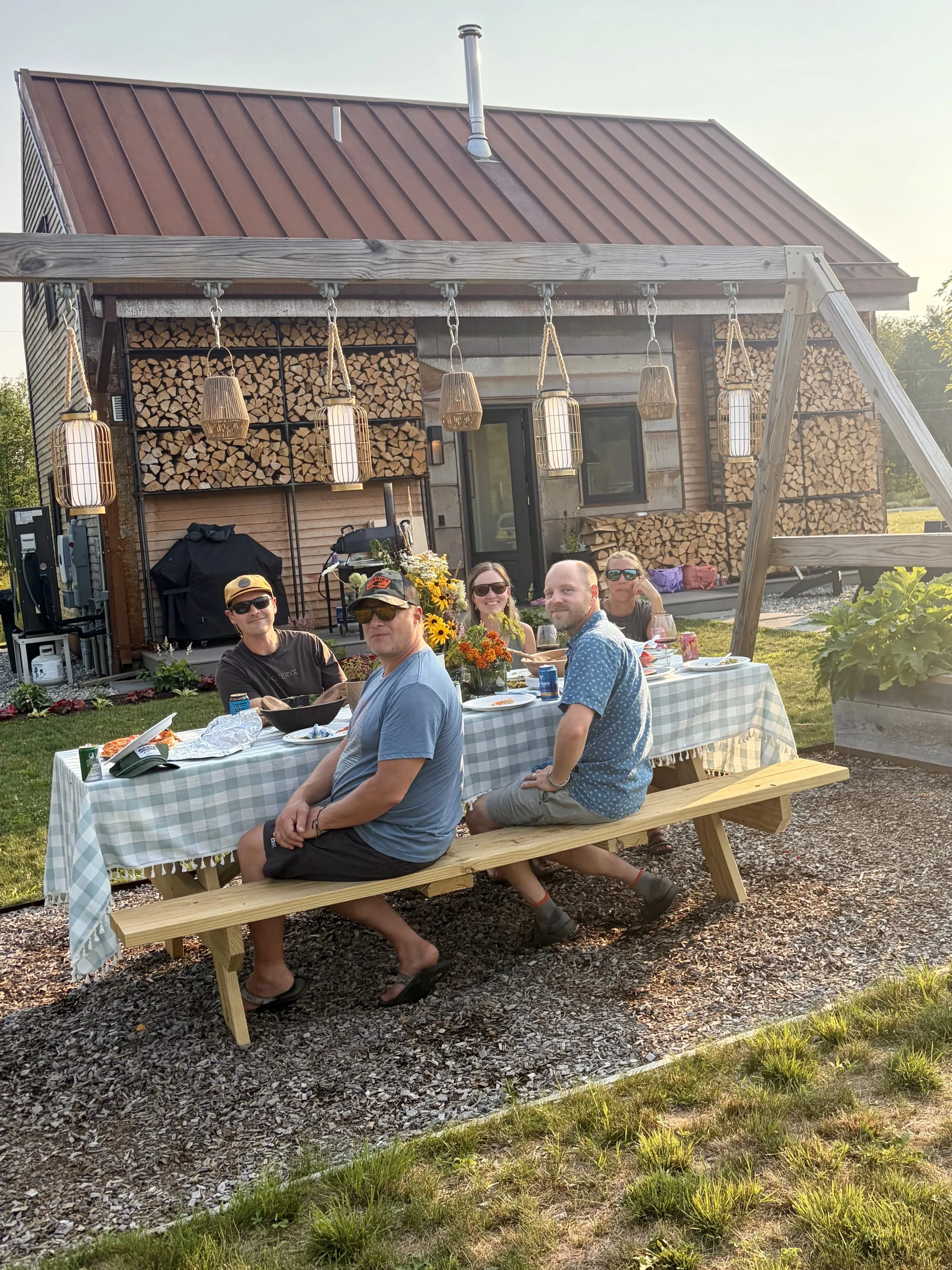
Last weekend, we had friends over for a small harvest garden party.
As people arrived, they immediately recognized the structure. They remembered the old swing set. And then they saw what it had become.
The reactions were exactly what you hope for in a project like this
—surprise, a bit of disbelief, and then genuine excitement about the idea behind it.
But what stayed with me most wasn’t the reaction to the design itself. It was the feeling of continuity.
The structure that once held our kids’ swings is still here. It’s just holding something different now.
Instead of watching our kids swing beneath it, we’re gathering with friends under it. Instead of childhood play, it now holds summer dinners, garden harvests, long conversations, and late evenings outside.
It’s still part of our family’s story—just in a new chapter.
Why we call it a “reclaim”
I’ve always loved the idea of reclaiming something rather than replacing it.
Good design doesn’t always mean starting over.
Sometimes it means pausing long enough to ask a better question: what else could this be?
In this case, the structure was already strong. The footprint already worked. The hardware was already in place. The landscape already supported it.
We didn’t rebuild anything. We simply changed its purpose.
And in doing so, we extended the life of something we already owned.
That, to me, is a very real form of sustainability. Not just choosing something labeled “sustainable,” but actually using what you have more thoughtfully and intentionally.
The Takeaway:
If your kids have outgrown their playset, don’t rush to take it down.
Start by looking at it in place and asking how it might fit into your landscape in a new way.
Could it become an outdoor dining space on a patio? A shaded garden workspace? A casual lounge or gathering area?
Could you eliminate the lawn underneath it with a low-maintenance surface? Could you reuse the existing hardware for lighting instead of modifying the structure? Could you introduce plants that will eventually grow into it and soften it over time?
You don’t need to replicate what we did. In fact, you shouldn’t.
The value of a reclaim project is that it’s personal. It’s about what your structure can become in your own space, for your own family.
And if you do it, I hope you get that same moment we did—when someone walks into the yard, recognizes what it used to be, and then realizes what it has become.
Here’s to extending the life of something old, and creating an entirely new set of memories around it.
Shop the Swing Set Reclaim
The exact solar lights we used
Have any thoughts or questions? We’d love to hear from you. Drop a comment below or contact us here.